


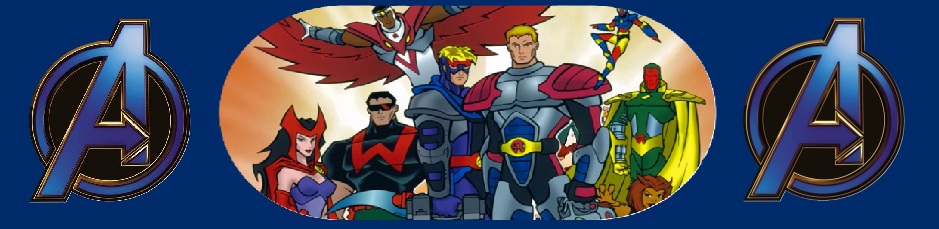
Despite it’s whimsical title, Egg-Streme Vengeance is an episode steeped in professional jealousy, wounded pride, and the dangerous lengths a brilliant mind will go to prove itself. At its heart lies the rivalry between Hank Pym and Elihas Starr — two scientists cut from the same cloth, yet driven in opposite directions. Where Hank uses his genius to protect, Starr twists his intellect into a weapon of spite, determined to humiliate the man he believes has overshadowed him since their university days.
The chaos at the Thanksgiving parade becomes the perfect stage for this clash of egos. Hank’s sudden loss of control over his own powers forces him to confront his deepest insecurity: that his intellect, the very thing that defines him, can be turned against him with a single miscalculation. Starr exploits that vulnerability with theatrical cruelty, using science not as discovery but as revenge, proving how easily pride can curdle into malice.
The episode also explores the fragility of reputation. Starr manipulates the press, twisting public perception to paint the Avengers as reckless and incompetent. Hank, already shaken by his condition, must watch as his rival steals the spotlight and weaponises it. The story becomes a meditation on how quickly public trust can be eroded — and how easily a clever lie can overshadow genuine heroism.
Ultimately, Egg-Streme Vengeance is about reclaiming confidence in the face of humiliation. Hank survives not because he outshines Starr, but because he trusts his team, his science, and the courage that sits beneath his self‑doubt. It’s a reminder that pride isolates, but humility — and the willingness to rely on others — is what truly saves the day.
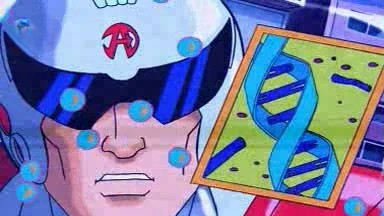
New York’s Thanksgiving parade is in full swing, with crowds cheering as balloons, floats, and even the Avengers themselves march through the streets. The celebration turns chaotic when several parade balloons and displays suddenly spring to life, attacking civilians without warning. The Avengers leap into action, battling animated floats while Hank Pym shifts size to tackle a towering foe — only to be blasted in the face by bubbles from a mysterious clown. Moments later, Hank collapses, horrified to discover he is growing uncontrollably. Vision warns that unless a cure is found, the strain on Hank’s body will kill him.
Amid the confusion, Elihas Starr — Hank’s bitter old rival — seizes the moment to publicly blame the Avengers for the disaster, whipping the press into a frenzy. Investigating the parade grounds, the team uncovers traces of the bubble compound and unmasks the clown as Starr in disguise. Starr then theatrically unveils an “antidote” and administers it to Hank in front of reporters, only for the formula to backfire and shrink Hank to microscopic size, placing him in even greater danger.
As the Avengers hunt for Starr, Vision and Wasp work desperately to create a counter‑formula. It’s untested and potentially lethal, but Wasp shrinks down to Hank’s level and administers the antidote herself, restoring him to normal size. Meanwhile, Wanda’s hex powers prevent Starr’s hired forces from escaping, tightening the net around the mastermind behind the parade attack.
With Hank safe, the Avengers confront Starr, whose smugness evaporates when Hank uses his Pym Particles to shrink him down and leave him helpless. The villain is handed over to the authorities, and the team emerges from the ordeal united — though Hank is left with a renewed awareness of how easily his own genius can be turned against him.
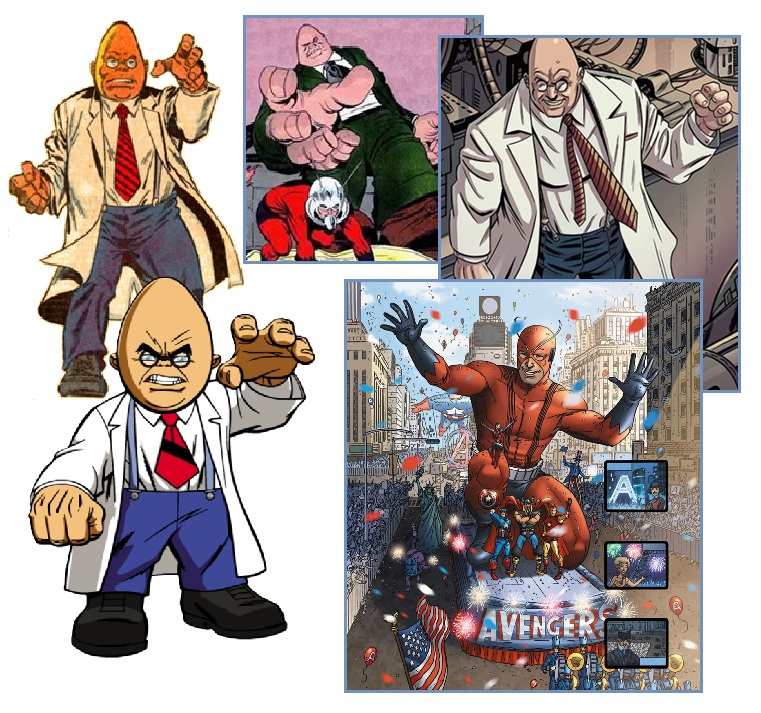
Despite the name, the villain in this episode has nothing to do with the Sixties’ Batman character of the same name. This Egghead is Elihas Starr, long-time arch rival of Hank with a rather unfortunately shaped cranium. He first appeared, courtesy of Stan and Jack, in 1962’s Tales to Astonish #38.
The Avengers have been on parade during Thanksgiving in the comics.
More armour variants appear in this episode when the Avengers attack Egghead’s compound.
Despite being the tenth episode of the series, the UK DVD release of the show orders it at episode three.
MADAME CHAIRPERSON: THE LEADERSHIP OF THE WASP
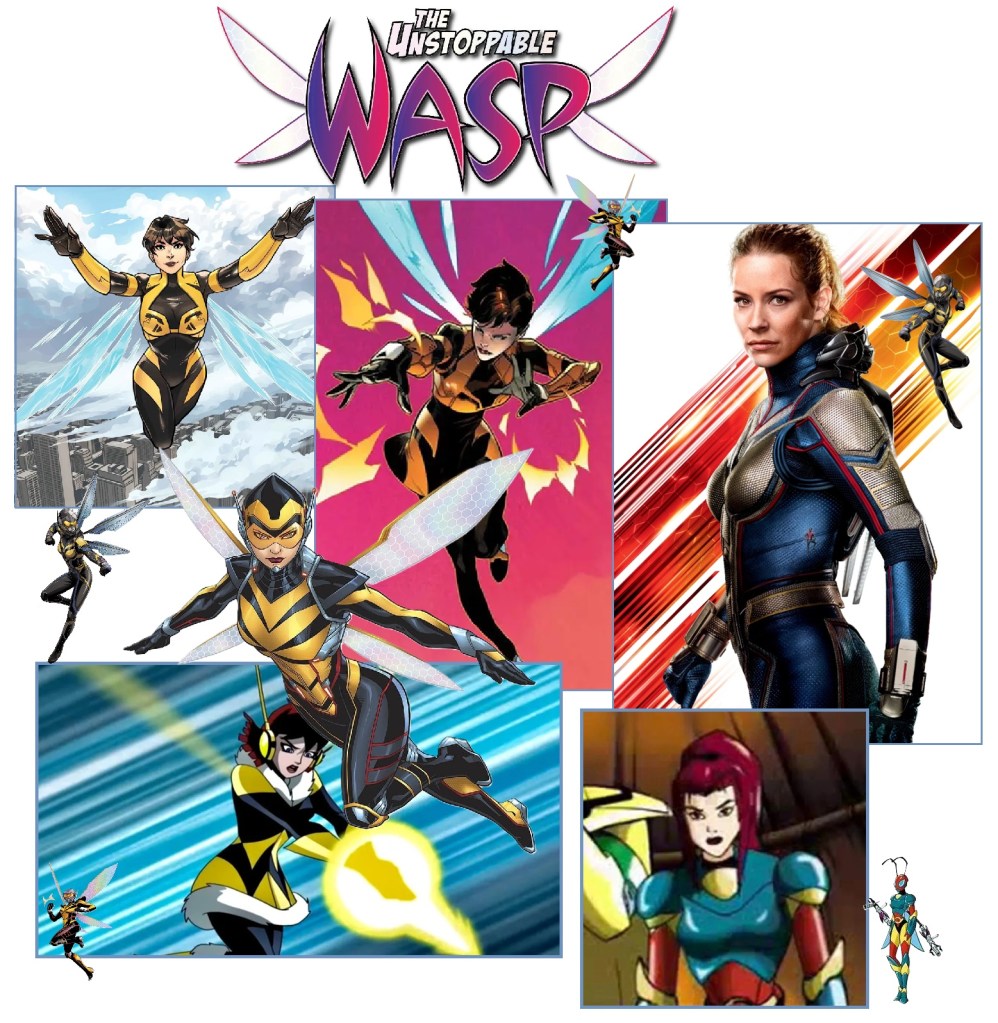
Janet van Dyne has always been one of the Avengers’ quiet powerhouses — a founder, a strategist, and, crucially, a leader who understood that heroism is as much about coordination and compassion as it is about strength. Her tenure as Chairperson in the 1980s marked one of the team’s most stable eras, not because she was the loudest voice in the room, but because she was the one who listened, mediated, and made the hard calls with clarity and grace. Under her guidance, the Avengers became a tighter, more cohesive unit, proving that leadership in a team of gods and geniuses requires emotional intelligence as much as tactical skill.
Janet’s leadership style was defined by balance. She could defuse egos without diminishing authority, steer the team through crises without losing sight of the human cost, and maintain morale even when the Avengers were stretched to breaking point. Her Chairpersonship wasn’t about dominance; it was about harmony — the ability to read a room, anticipate conflict, and keep the Avengers functioning as a family rather than a collection of weapons. In many ways, she set the template for what an Avengers leader should be.
Her presence in the MCU has taken a different shape, with the role split between Janet van Dyne and her daughter, Hope. Michelle Pfeiffer’s Janet is a survivor of the Quantum Realm, a figure of wisdom and resilience, while Evangeline Lilly’s Hope becomes the modern Wasp — sharper, more grounded, and more physically central to the action. Though the MCU shifts her history, the essence remains: the Wasp is a figure of capability, intellect, and emotional steadiness, a hero who leads not by force but by example.
Across comics and screen, the Wasp endures as one of the Avengers’ most essential figures. She proves that leadership is not about size or spectacle, but about clarity of purpose and the courage to guide others through uncertainty. Whether chairing the team in the comics or shaping its future in the MCU, Janet van Dyne remains the beating heart of the Avengers — stylish, strategic, and utterly indispensable.
What a Vision Has to Do | The Sorceress’s Apprentice




 X-Cess Minutiae
Leave a comment