


Earth and Fire (Part 1) is a story about instability — not just the literal fractures tearing through the planet, but the emotional ones running through the Avengers themselves. Simon Williams wakes into a world that no longer fits him, a man rebuilt from ionic energy and memory fragments, forced to confront the Vision, who carries his mind without his history. The episode leans into that dissonance: the fear of being replaced, the shock of returning to a life that has moved on, and the quiet terror of seeing yourself reflected in someone who is not you.
Beneath the personal turmoil lies a broader theme of pressure — the kind that builds slowly, invisibly, until the world begins to crack. Taurus manipulates the Earth like a machine, squeezing it with cold precision, while the Avengers feel their own internal tensions tightening. Hank’s jealousy, Janet’s instincts, Simon’s pain, and the team’s scattered response all mirror the planet’s growing strain. The disasters are not just geological; they are emotional fault lines widening under the weight of unspoken fears.
The episode also explores the danger of legacy. Janet confronts the ghosts of her father’s work, discovering that the past she believed buried has been twisted into a weapon. Simon grapples with the legacy of his own mind, now shared with the Vision. And Taurus, hidden behind the mask of Cornelius Van Lundt, wields inherited knowledge with ruthless ambition. Every character is forced to reckon with what has been left behind — and what refuses to stay buried.
At its heart, Earth and Fire (Part 1) is about the moment before the break: the pressure rising, the ground trembling, the sense that something vast and unstoppable is shifting beneath your feet. It is the story of a team stretched thin, a world on the brink, and a man newly awakened who feels the planet’s pain as though it were his own. The fractures have begun; the question is how many of them can be mended before everything gives way.
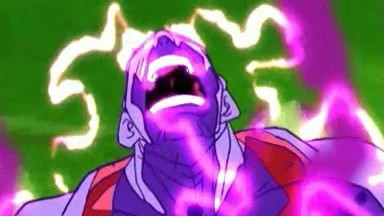
Wanda’s unpredictable hex bolts finally jolt Wonder Man from his long coma, pulling Simon Williams back into a world that has moved on without him. Hank’s tests insist he is perfectly healthy, but Simon is shaken to his core. Everything feels wrong — unfamiliar — and nothing unsettles him more than the Vision, a being who now carries his own brain engrams. It is like staring into a mirror built by someone else, and Simon recoils from it.
Elsewhere, Taurus sets his grand design into motion. Hidden within his headquarters, he activates a network of magnetic devices buried across the globe. Earthquakes erupt in three distant regions, tearing at the planet’s crust with unnatural precision. At that same moment, Simon collapses, wracked with agony as though his very atoms are being pulled apart. His ionic energy scrambles Hank’s readings, leaving Ant‑Man no choice but to keep him at the Mansion while the Avengers race to the disaster sites.
Janet, sensing a pattern no natural phenomenon could produce, follows her instincts to Cornelius Van Lundt — her father’s old business partner. She is certain the disturbances match technology the two men once designed, technology she believed destroyed. The team splits, each Avenger heading to a different crisis point to provide relief, only to be met by Zodiac operatives lying in wait.
Janet confronts Van Lundt, demanding answers. Hank, driven by jealousy and worry, shadows her. Cornelius denies everything, but Janet sees through him — and once she leaves, the truth is laid bare. Van Lundt is Taurus, the architect of the Zodiac cartel, and he increases the power output of his devices, tightening the invisible grip tearing the Earth apart. Simon feels every surge like a blade through his chest.
Janet and Hank infiltrate Van Lundt’s base and uncover the full horror: the disasters are converging on a single point, an island near Japan, as though the planet itself is being squeezed by an unseen hand. Before they can escape with the information, Zodiac robots descend upon them. Hank is struck down, left motionless on the floor, and Janet finds herself trapped and helpless as the world outside continues to fracture…
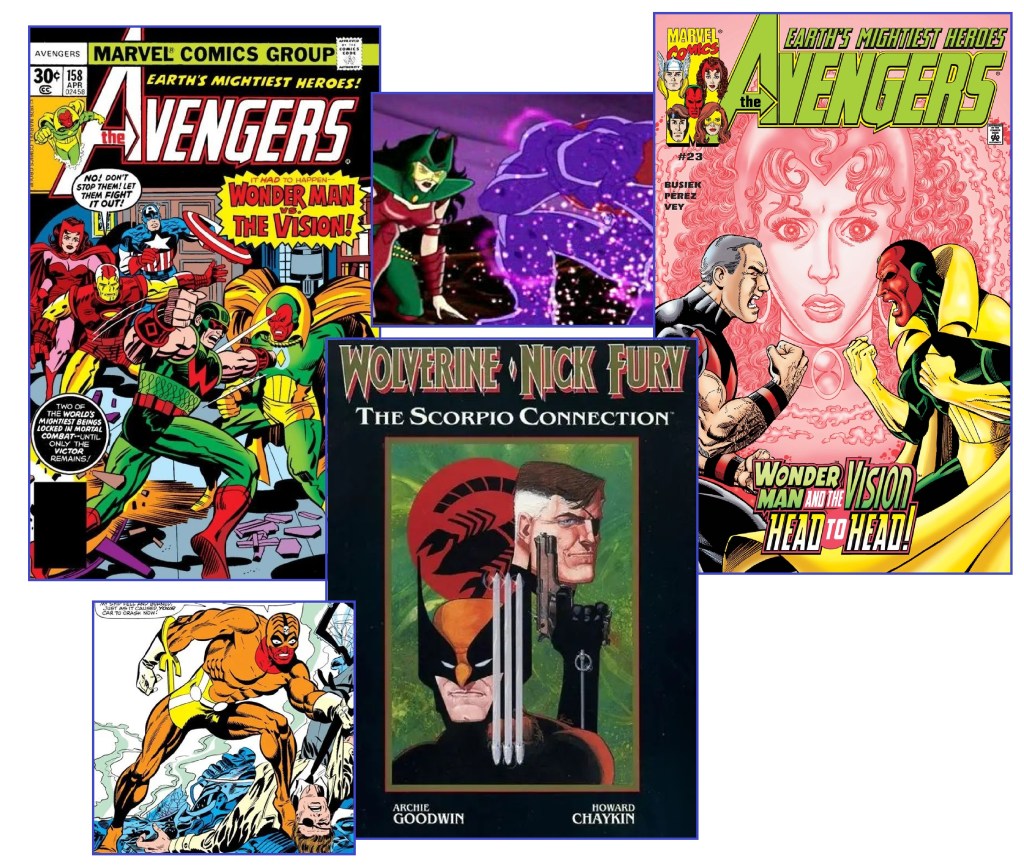
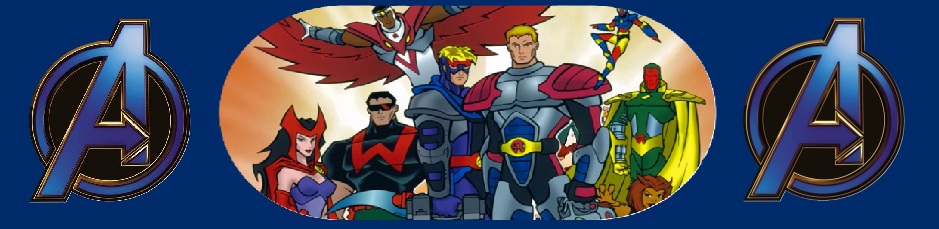
The Avengers are wearing brand new armour again – just in time for the series finale. Falcon’s armour in particular resembles his original costume from the comics.
This episode briefly touches on one of the more interesting love triangles in comics: the one between Scarlet Witch, her lover Wonder Man and the Synthezoid based on him, Vision.
Jacob Fury, aka Scorpio, is the son of Nick Fury, Agent of SHIELD.
SOARING HIGH: SAM WILSON
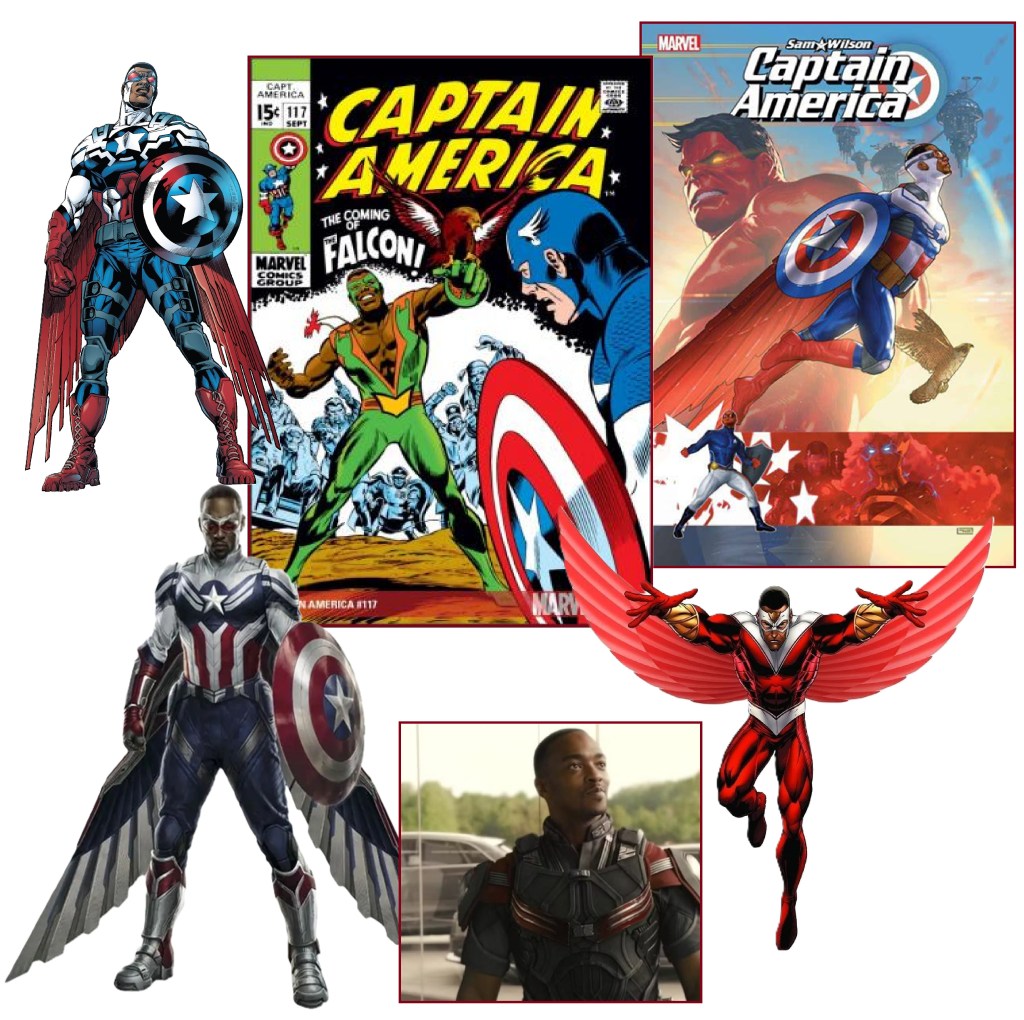
Sam Wilson stands in the Marvel mythos as one of its most grounded, clear‑eyed heroes — a man who chooses to rise not because of powers or legacy, but because he refuses to look away when someone needs him. First introduced in Captain America #117 in 1969, Sam arrived not as a soldier or a superhuman, but as a social worker from Harlem who believed in lifting people up long before he ever took to the skies. His transformation into the Falcon didn’t overwrite that foundation; it amplified it. The wings, the aerial grace, the partnership with Redwing — all of it sits atop a core of empathy and conviction that has always defined him.
As an Avenger, Sam brings something the team often lacks: perspective. Where others see global threats and cosmic stakes, Sam sees the people caught in the middle — the families displaced, the communities shaken, the individuals who need someone to stand beside them. His instincts are not driven by ego or glory, but by a deep, unwavering sense of responsibility. He is the Avenger who listens first, who understands that saving the world means nothing if you forget the world you’re saving.
Across animation and the wider Marvel canon, Sam often becomes the team’s moral centre — steady, principled, and unafraid to challenge even his closest allies when their judgement falters. His partnership with Captain America, whether Steve Rogers or others who carry the mantle, is built not on hierarchy but on trust. Sam is the friend who tells the truth, the partner who steadies the fall, the hero who steps forward when others hesitate.
Sam endures because he represents the courage of ordinary people who choose to do extraordinary things. He is proof that heroism is not bestowed by accident or experiment, but forged through compassion, resilience, and the refusal to let the world harden your heart. In a universe of gods, geniuses, and legends, Sam Wilson remains something rarer: a man who flies not to escape the world, but to better see the people he’s fighting for.




 X-Cess Minutiae
Leave a comment