


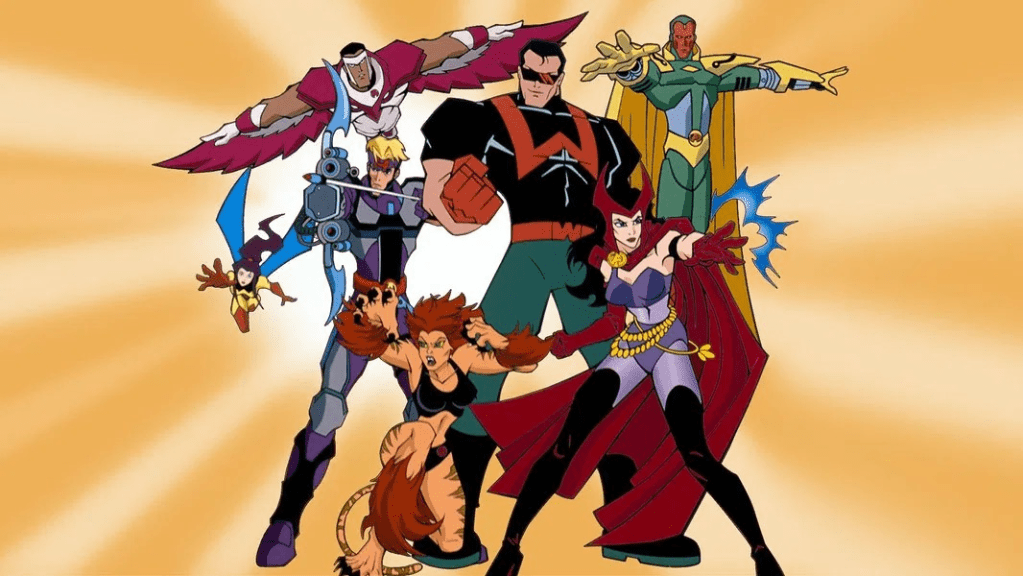
Earth and Fire (Part 2) plays like the moment a fault line finally gives way — all the pressure, all the strain, all the unspoken fears of the season cracking open at once. The episode turns on escalation: the planet buckling under Taurus’s design, the team stretched thin across continents, and Simon Williams caught in a storm of ionic agony he cannot control. It is a story about bodies and worlds under siege, about the cost of pushing too far for too long, and about the quiet terror of realising that something fundamental may be breaking beyond repair.
At its heart lies the theme of inheritance. Janet confronts the legacy of her father’s work, twisted into a weapon she never imagined. Hank faces the consequences of his own brilliance, forced to watch Simon’s unstable form unravel under forces he cannot yet understand. And Taurus, ever the zealot, believes he is claiming a destiny written in cosmic stone. Every character is wrestling with something they did not choose but must now answer for — the past rising like a buried meteor, dragged violently into the present.
The episode also leans into the fragility of leadership. Hank tries to hold the team together while doubting every decision he makes. Janet steps into danger again and again, driven by instinct and guilt in equal measure. The Avengers, scattered and ambushed, fight not just enemies but the creeping fear that they are losing ground faster than they can reclaim it. Even their victories feel brittle, overshadowed by the sense that the world is shifting beneath their feet.
And then comes the ending — quiet, intimate, and devastating. Simon stabilises, but Hank’s diagnosis hangs in the air like a sentence: Wonder Man may never return to active duty. It is a moment of stillness after the chaos, a reminder that not every battle ends with triumph, and not every hero gets to rise again. In another world, another season, this would have been the beginning of a new arc — a story about recovery, identity, and the cost of being remade. But the series ends here, the final shot lingering on uncertainty rather than resolution, leaving the Avengers poised on the edge of a story they will never get to finish.
In that unfinished breath lies the episode’s final theme: the ache of what might have been. Earth and Fire (Part 2) becomes not just a finale, but a fragment — a world still trembling, a team still fighting, a hero still healing — frozen at the moment before the next chapter could begin.
Janet saves Hank in the final heartbeat, shrinking them both out of the robots’ line of fire. The information they came for is lost, but together they destroy the files before Taurus can exploit them. The victory feels thin. Janet shoulders the guilt of her father’s work falling into the wrong hands, while Taurus remains utterly unmoved — his devices are active across the globe, the Avengers are scattered, and the planet is already beginning to strain under the pressure he has engineered.
Across the disaster zones, the team is ambushed by Zodiac operatives lying in wait. Wasp and Ant‑Man trace the epicentre to Japan, where magnetic fields twist the air into a shimmering haze. Hank orders every device destroyed before the Earth tears itself apart. Hawkeye brings down Ares with precision; Tigra and Falcon turn Libra’s own power against her; and Wonder Man’s ionic energy flares violently, threatening both himself and the civilians he is trying to save. Above Japan, the interference worsens, the island groaning under forces it cannot withstand.
Hank’s research reveals the truth buried beneath the chaos: a meteorite of unknown origin crashed here eons ago, its alien rock still lodged deep within the Earth. Taurus’s devices have been squeezing it free, using the planet itself as leverage. The meteor is the key to the cosmic power he craves. As the Zodiac descend to claim it, the world convulses. Lava erupts, swallowing the Quinjet, and Hank and Janet escape by inches. Every shift of the rising meteor tears at Simon’s ionic form, as though the rock is pulling at the energy that keeps him alive.
Janet launches a desperate strike on the Zodiac craft but is captured mid‑flight. Hank grows to Giant‑Man and tears her free, holding the line alone until the others arrive. But Taurus refuses to yield. Even after Hank shatters the meteor, Taurus dives into the debris and retrieves a single fragment — enough, he believes, to finish what he has begun. The Zodiac flee, leaving the world trembling in their wake.
Back at their base, the Cartel watch as Taurus channels the meteor’s energy, cosmic power crackling through his hands as he turns the Zodiac Key a fraction further. At Avengers Mansion, Simon stabilises, but Hank remains troubled. The ionic energy leaking from Wonder Man’s body is unpredictable and dangerous, and even if Hank can repair the damage to Simon’s genetic code, he fears the truth he cannot yet speak: Wonder Man may never again be able to stand with the Avengers in battle.
HANK PYM: A LEADER WITH ISSUES
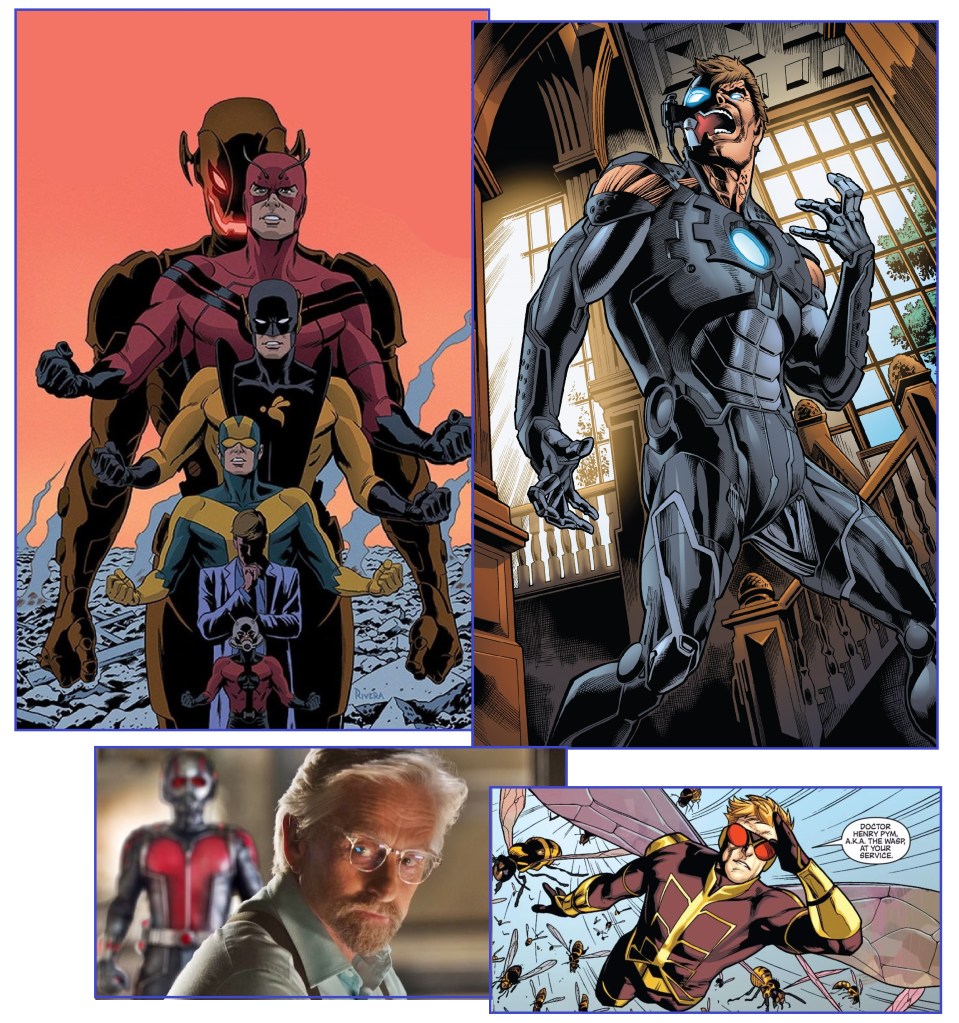
Hank Pym has always been one of Marvel’s most intricate figures — a man whose genius is matched only by the fragility that shadows it. From the moment he stepped onto the page in 1962’s Tales to Astonish #27, he carried the weight of a mind that never stops moving, inventing identities as quickly as he invents technology. Ant‑Man, Giant‑Man, Goliath, Yellowjacket — each persona reflects a different attempt to outrun his own doubts, to find a version of himself that feels whole. His brilliance is undeniable, but it is never uncomplicated.
His mental health struggles run like a quiet fault line beneath his entire history. Hank’s anxiety, perfectionism, and bouts of depression often push him into spirals of self‑recrimination, leaving him convinced he is failing the very people who rely on him. The Yellowjacket breakdown remains the most infamous example, but it is only one moment in a longer pattern of a man wrestling with a mind that can turn on him without warning. His story is not one of villainy, but of vulnerability — a reminder that even the brightest intellects can fracture under their own expectations.
This tension shapes his relationship with the Avengers. Hank is the founder who never quite feels like one, the scientist who watches others take the spotlight while he stands at the edge, wondering if he belongs there at all. Janet sees the best in him even when he cannot; the Vision carries the burden of Hank’s greatest mistake; and the rest of the team treat him with a mixture of respect and caution, aware of how easily he can slip into self‑doubt. His awkwardness within the ensemble is not a flaw but a truth — he is a man who wants to help, yet fears he is always one misstep away from letting everyone down.
In the MCU, Michael Douglas reframes Hank with a weathered, sardonic gravitas — a man who has survived his own brilliance and carries the scars with a brittle sort of pride. Douglas’s Hank is older, sharper, and more self‑aware, a mentor who has learned when to step back and when to trust someone else with the mantle. It is a portrayal that honours the character’s history while giving him a dignity forged through regret and resilience. Hank endures because he embodies the messy, human truth that heroism is not a straight line; it is the act of rising, again and again, even when your greatest enemy is the voice in your own head.
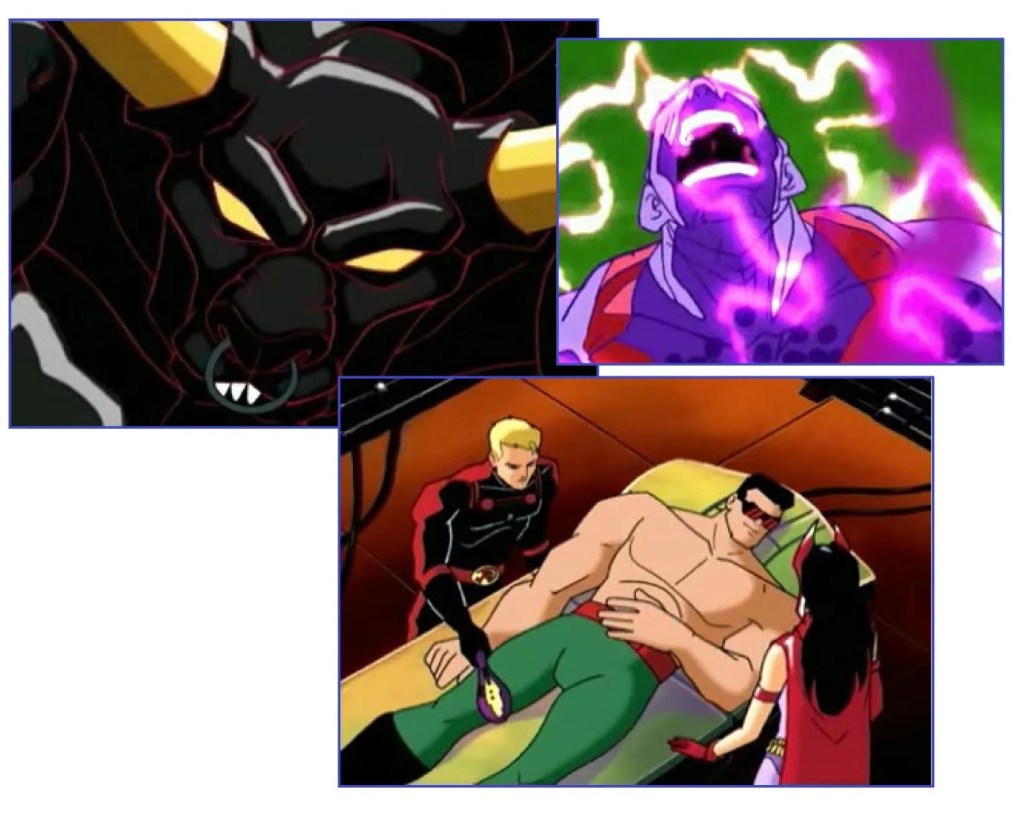
Due to the series’ cancellation, there are two unresolved cliff-hangers of note at the conclusion: Wonder Man’s fate on the team and the culmination of Taurus’ final plan to turn the Scorpio Key.
Plans for Season 2 included an origin for the Scarlet Witch, two part stories with Thor, Loki and Captain America and an appearance from the Hulk and the X-Men.
THE AVENGERS ASSEMBLE!
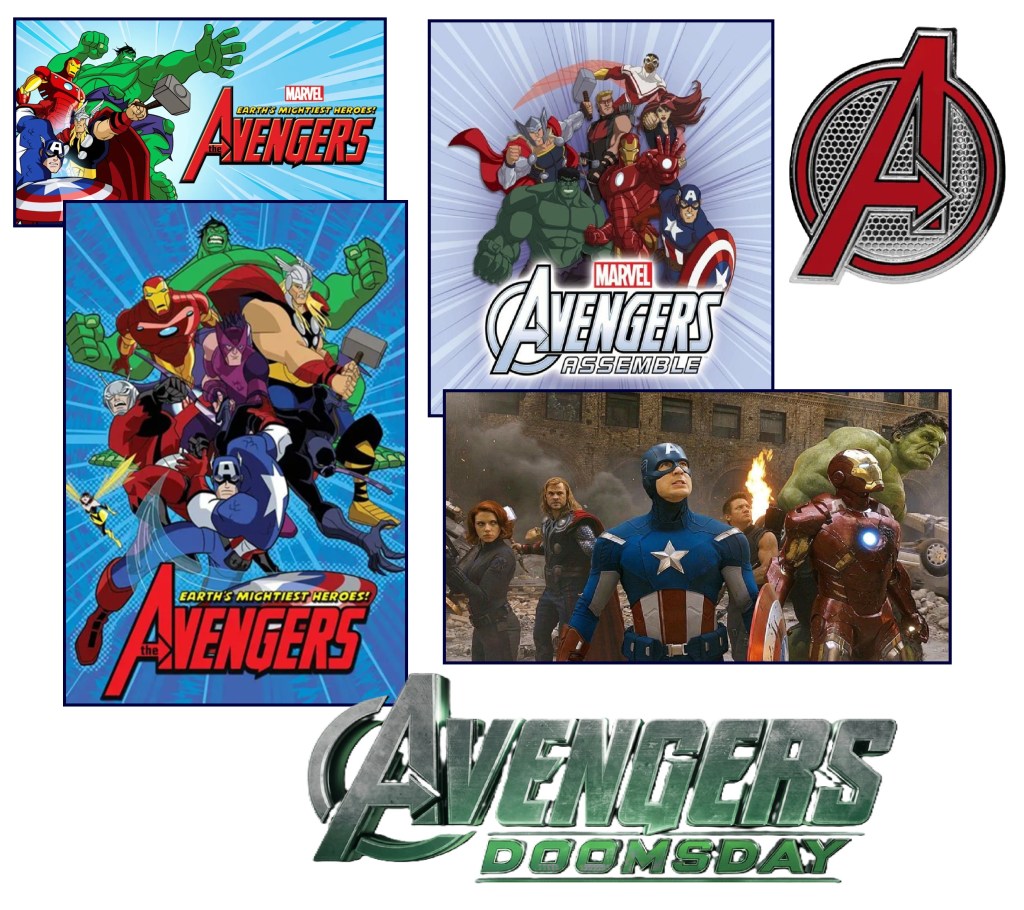
The twenty‑first century reshaped the Avengers from a long‑running comic institution into a global myth — a modern pantheon retold across animation, cinema, and streaming with a scale and emotional clarity that finally matched the ambition of the source material. Each incarnation since 2000 has carried its own cadence, its own thesis about what the Avengers are and why they matter, yet together they form a tapestry that has defined superhero storytelling for an entire generation.
The Avengers: Earth’s Mightiest Heroes arrived first as the purest love‑letter to the comics, a series that treated the team’s history not as a burden but as a treasure chest. It embraced the sprawling mythology — Kang, Ultron, the Kree–Skrull War, the Masters of Evil — with a confidence that made the Avengers feel mythic without losing their humanity. EMH understood the ensemble as a living organism: flawed, funny, fractious, and fiercely loyal. It remains the closest the medium has come to capturing the Avengers at their most comic‑book true, where character arcs and long‑form storytelling intertwine with operatic ease.
Avengers Assemble followed with a different mission. Leaner, lighter, and shaped by the gravitational pull of the MCU, it reframed the team for a younger audience while still honouring the emotional beats that define them. Assemble’s strength lies in its accessibility — a gateway series that distilled the Avengers’ core dynamics into something bright, kinetic, and character‑driven. It may not chase the same mythic sweep as EMH, but it understands the value of camaraderie, humour, and the constant negotiation of personalities that makes the team function.
And then there is the MCU, which transformed the Avengers from comic icons into cultural landmarks. Across more than a decade, the films built a shared universe that treated the team not as a monolith but as a family forged through conflict, grief, triumph, and sacrifice. The MCU’s Avengers are defined by their fractures as much as their victories — Tony’s guilt, Steve’s idealism, Natasha’s ledger, Thor’s loss, Bruce’s self‑doubt — and the way those wounds shape the choices they make. The ensemble becomes a study in found family, where saving the world is inseparable from saving each other. The MCU didn’t just popularise the Avengers; it redefined what a superhero team could be on screen.
Together, these post‑2000 incarnations form a single evolving myth: the Avengers as a story of unity under pressure, of flawed individuals learning to stand together when the world demands more than any one of them can give. Animation gave them breadth, cinema gave them weight, and the audience — across continents and generations — gave them permanence. The Avengers endure because every medium finds a new way to tell the same truth: that heroism is not a power, but a choice made in the company of others.




 X-Cess Minutiae
Leave a comment