


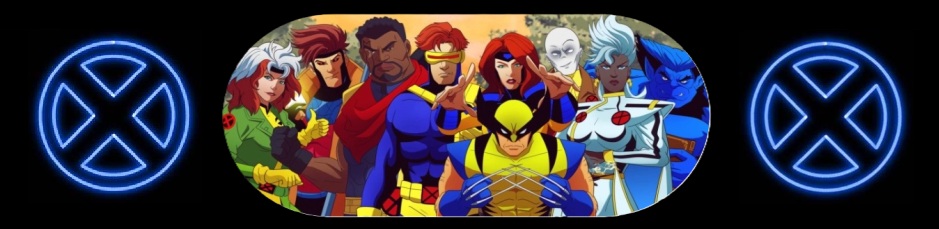
The Dark Phoenix Saga stands as one of the most iconic storylines in Marvel Comics history, especially within the X-Men series. Created by writer Chris Claremont and artist John Byrne, it first appeared in 1980 and centres on Jean Grey, a founding member of the X-Men, and her transformation into the Dark Phoenix. The story kicks off with Jean Grey being exposed to a deadly solar flare during a space mission, unlocking her full potential as a telepath and telekinetic. She becomes the Phoenix, a being of immense power, but this power soon corrupts her, leading to her transformation into the Dark Phoenix. Under the influence of the Hellfire Club, particularly Mastermind, Jean’s darker side emerges, causing her to lose control and ultimately leading to catastrophic events, including the destruction of an entire star system.
The impact of the Dark Phoenix Saga on comics and the X-Men is immense. It elevated the stakes in superhero storytelling, showing that characters could undergo profound and tragic transformations. Jean Grey’s struggle with her immense power and her eventual sacrifice added depth and complexity to the X-Men series, making it more than just a typical superhero comic. The storyline also introduced key characters like Kitty Pryde, Dazzler, and Emma Frost, who would go on to become significant figures in the Marvel Universe. The Dark Phoenix Saga’s themes of power, corruption, and redemption have resonated with readers for decades, cementing its status as a classic.
The animated series adaptation of the Dark Phoenix Saga, featured in X-Men: The Animated Series, is often considered the best adaptation of this storyline. This version, which aired in the 1990s, is praised for its faithfulness to the original comic arc. It managed to capture the essence of Jean Grey’s transformation and the emotional weight of her struggle. Unlike some live-action adaptations, the animated series retained key elements such as the involvement of the Hellfire Club and the cosmic scope of the Phoenix’s powers. The series’ ability to stay true to the source material while delivering a compelling and emotionally resonant story is why many fans regard it as the definitive adaptation of the Dark Phoenix Saga.
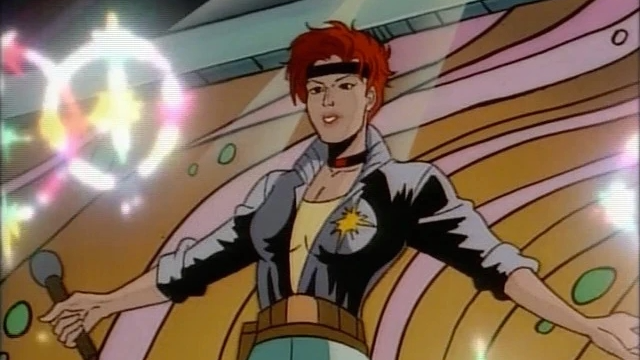
At Muir Island, Jean Grey undergoes treatment under the watchful eyes of Professor X and Moira MacTaggert, who are puzzled by Jean’s miraculous survival from her solar encounter. Meanwhile, in New York, Cyclops and Gambit enjoy a performance by Dazzler at a local club, contemplating an invitation for her to join the X-Men. Post-performance, Cyclops witnesses Dazzler under attack by Donald Pierce of the Inner Circle Club. A confrontation ensues, revealing Pierce’s cyborg nature, but he ultimately flees. Dazzler expresses her gratitude to Cyclops for his timely intervention.
Professor Xavier and Jean Grey make their way back to the mansion, followed closely by Cyclops and Gambit. Concerned, Cyclops inquires about Jean’s prolonged recovery. Xavier reveals that the Phoenix Force still resides within her.
Meanwhile, at the Inner Circle Club, members convene to strategize over the Phoenix Force, their knowledge gleaned from the psychic insights of Emma Frost. Their objective is clear: harness the power of the Phoenix. To achieve this, they dispatch Mastermind with a singular mission: to dominate the will of Jean Grey.
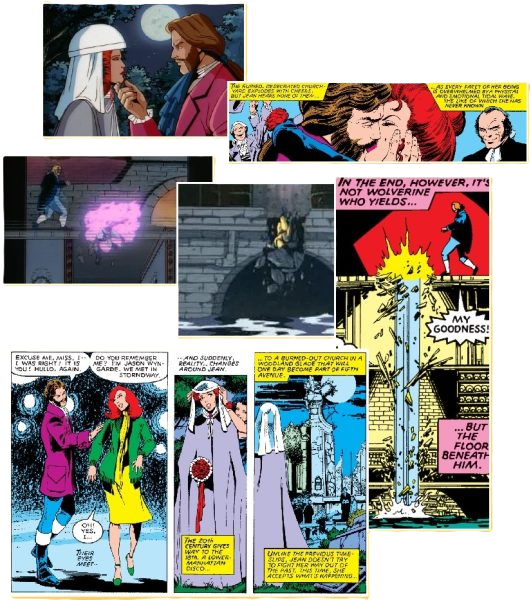
At the mansion, Jean’s struggle intensifies as the Phoenix gains dominance. Cyclops departs to meet Dazzler, while Emma and Mastermind begin their manipulation, immersing Jean in a Victorian dream where she’s wed to Mastermind. However, Jean’s psychic bond with Cyclops awakens her, and she teleports to his location, only to witness him kissing Dazzler. Devastated, Jean succumbs to Mastermind’s illusion once more.
The X-Men rally to find Jean, tracing her to the Inner Circle Club. Rogue disrupts Jean and Mastermind’s wedding by crashing through a skylight, prompting the team to confront the Inner Circle. In the ensuing chaos, Jean, now fully under Phoenix’s sway, turns against her comrades.

Logan mentioned in Savage Land, Strange Heart that Jean was on Muir Island after being found, off-screen, in No Mutant is an Island.
In the X-Men ’97 episode Motendo, Mojo tells Jubilee that Dazzler didn’t work out as an act in the Mojoverse. Dazzler was seen in a cameo in the Mojoworld set episode Mojovision.
Sebastian Shaw first appeared in Uncanny X-Men #129, shortly before his Inner Circle compatriots. He’s a ruthless mutant businessman who doesn’t care about much except money and power and being on the winning side. He’s played by Kevin Bacon in X-Men: First Class which shows a big-screen adaption of the Club. This version of Shaw is killed in Remember It in X-Men ’97‘s first season.
Harry Leland and Donald Pierce, one a mutant, the other a cyborg, first appeared in Uncanny X-Men #132. Pierce is also leader of the Reavers, which is made up of Hellfire Club goons injured in this story in the comics.
Emma Frost, telepath extraordinaire, and these days far more associated with the X-Men than the bad guys, first appeared in Uncanny X-Men #129. She handily recaps the Phoenix’ backstory from earlier this season. We even, briefly, see Jean being recovered after she returns to Earth.
Due to the nature of adaptions, Colossus and Nightcrawler’s parts in the original story are replaced by Rogue and Beast.
Many of the scenes in this episode are taken from the original comic panels with great detail and care. Chris Claremont is credited for his creation of the story.
LET THERE BE LIGHT!
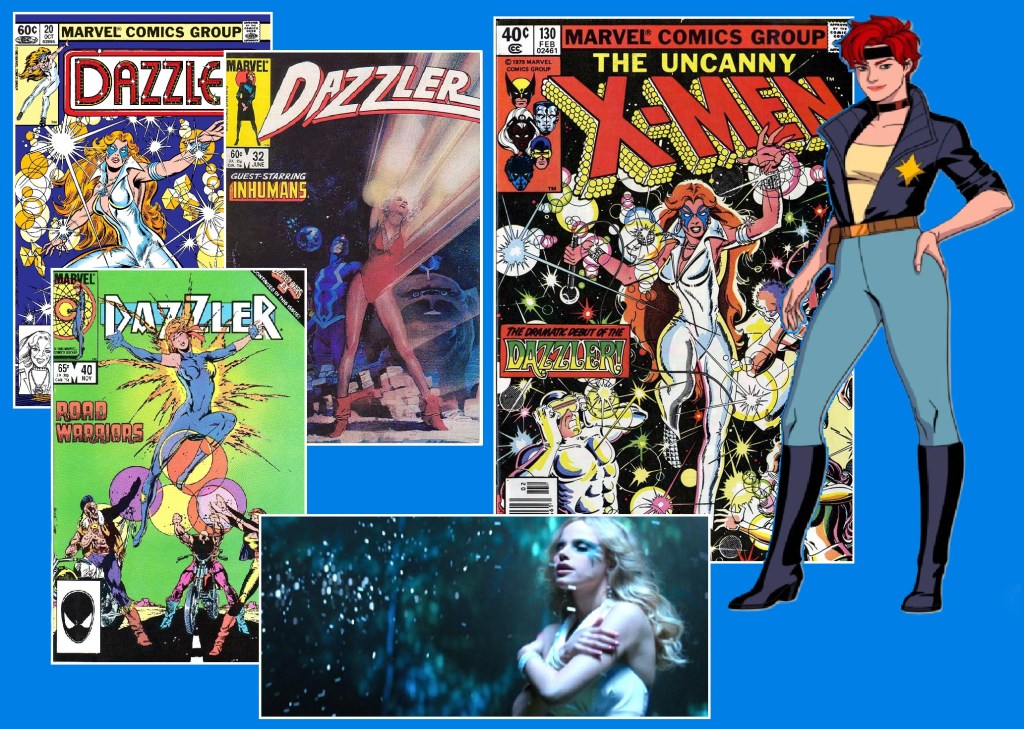
Dazzler, also known as Alison Blaire, is a unique and vibrant character within the X-Men universe. First appearing in Uncanny X-Men #130 in 1980, Dazzler is a mutant with the ability to convert sound vibrations into light and energy beams, a power she often uses in her performances as a singer and entertainer. Originally conceived as a cross-promotional character between Marvel Comics and Casablanca Records, Dazzler was intended to capitalize on the disco craze of the late 1970s. Although the music tie-in was eventually dropped, Dazzler continued to shine in the Marvel Universe.
In the comics, Dazzler’s journey is marked by her struggle to balance her dual identities as a pop star and a superhero. Her solo series in the early 1980s ran for 42 issues, during which she faced numerous challenges, from battling supervillains to dealing with the pressures of fame. Dazzler’s character has evolved over the years, joining various teams such as the X-Men, New Excalibur, and A-Force. Her ability to convert sound into light has been depicted in various creative ways, from creating dazzling light shows to using her powers in combat situations.
Dazzler’s role in the X-Men comics is significant not only for her unique powers but also for her representation of the intersection between celebrity culture and superhero life. She has been a part of major story arcs, including the Dark Phoenix Saga, where she played a crucial role in the X-Men’s battle against the Hellfire Club. Her character has also been featured in alternate realities and future timelines, showcasing her versatility and enduring appeal. Her character continues to evolve, with recent comic book series exploring new facets of her personality and powers. Dazzler’s enduring popularity is a testament to her unique place in the Marvel Universe, where she continues to light up the world with her dazzling abilities and unwavering spirit.
Savage Land, Strange Heart (Part 2) | The Dark Phoenix Saga (Part 2): The Inner Circle




 X-Cess Minutiae
Leave a comment