


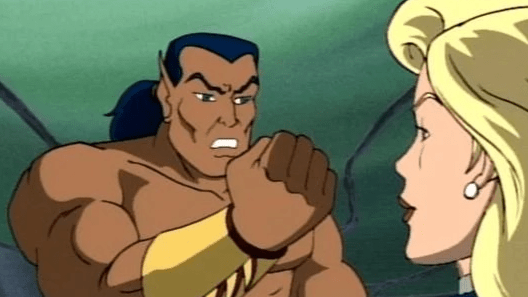
Namor doesn’t just crash the party – he owns it. From the moment the Sub-Mariner rises from the ocean to deliver his ultimatum, it’s clear we’re dealing with something different. Voiced with stately weight by Shakespearean actor James Warwick, Namor brings real regal firepower, delivering a performance that feels pulled straight from a throne room.
The episode’s theme hits hard: environmental justice, long before it was mainstream. Namor’s fury over oceanic pollution isn’t just a plot device – it’s a prophetic warning that still rings true today. Dorma’s presence adds quiet depth, challenging Namor’s impulses with reason and heart, while Sue’s capture gives the whole standoff an emotional undertone.
And then there’s the strange part: he never comes back. Despite all that presence and setup, Namor vanishes after this one outing. It’s baffling, but in a way, makes the episode feel like a perfect storm – brief, bold, and unforgettable.
Now Comes the Sub-Mariner doesn’t just introduce a character. It delivers a tidal wave of power, pride, and purpose. Even if the animation occasionally wobbles, the message holds firm. And with Namor at the helm, it commands attention.
The Fantastic Four attend a scientific symposium, where the proceedings are abruptly interrupted by Namor, the Sub-Mariner – monarch of Atlantis and protector of the ocean. Outraged by the pollution inflicted upon his domain, Namor issues a stern warning to the surface world before abducting Sue Richards, declaring her his chosen queen and taking her to his undersea kingdom.
In response, Reed Richards, Johnny Storm, and Ben Grimm launch a rescue mission, journeying into the depths of Atlantis to retrieve their teammate. Within the royal court, Lady Dorma, a high-ranking Atlantean and close confidante of Namor, observes the unfolding events with deep concern. Loyal to Namor but disturbed by his impulsive actions, Dorma appeals to his better judgment, questioning the wisdom of pursuing a union with a surface-dweller and urging restraint.
As tensions escalate, a greater danger emerges. Warlord Krang, Namor’s ambitious military commander, spurned on by Lady Dorma’s jealousy of Sue, launches an unauthorized invasion of the surface world, hoping to exploit Namor’s distraction and seize control of Atlantis. Realizing the threat posed by Krang’s insurrection, Namor forms an uneasy alliance with the Fantastic Four to thwart the assault and restore stability.
Together, the team and Namor repel Krang’s forces by using one of Reed’s devices to cut off their supply to the life-giving salt water. Sue is safely returned, and the invasion is halted – but the fragile détente between Atlantis and the surface remains unresolved. Dorma’s voice of reason proves instrumental in guiding Namor back from the brink and home towards the ocean with his new queen, whose life has been saved by his enemies. “There will be another day,” he declares, as he returns to the depths.
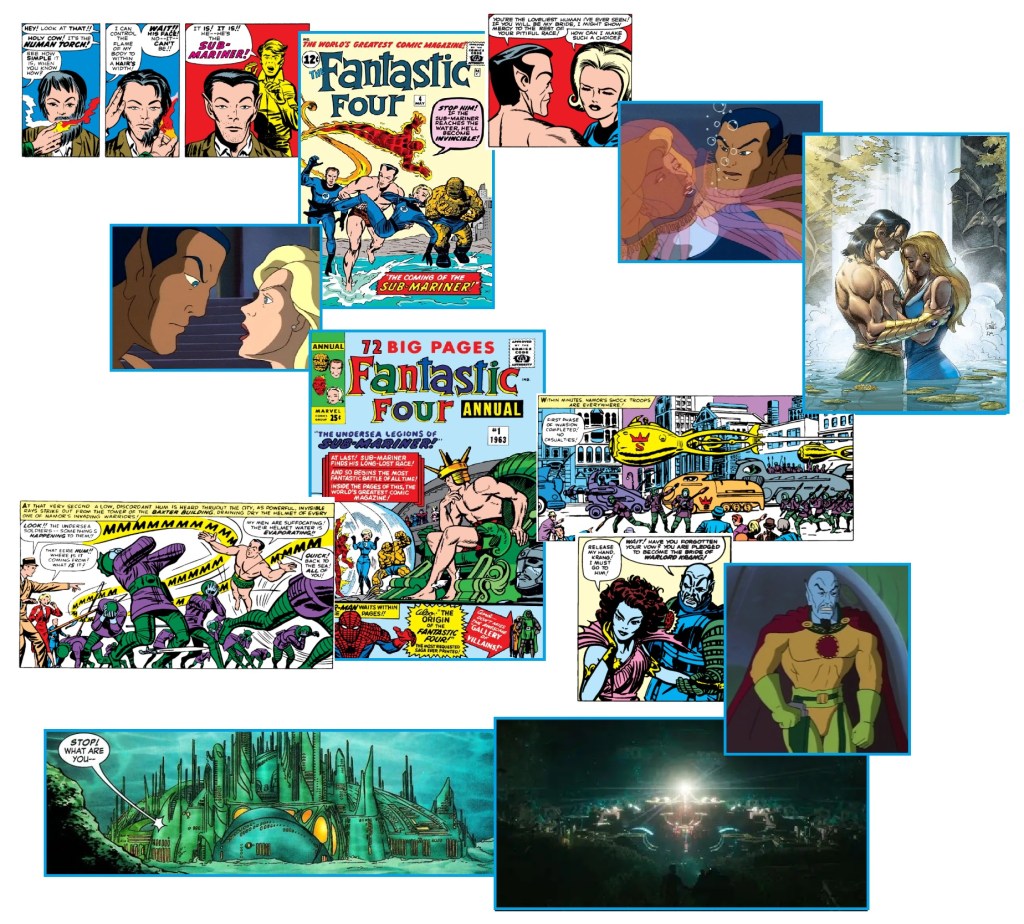
Namor disguises himself as an aquatic professor, complete with face mask, to announce his intentions to the surface world. The ripping of his mask is similar to the panel where his face is revealed in Fantastic Four #4.
The dialogue confirms that this episode is the first instance of the team meeting Namor, meaning the talk show segments in The Origin of the Fantastic Four (Parts 1 & 2) were set at least after the events of this episode.
Sue Storm and Namor have always held an attraction for the other, but have very rarely acted upon it. However, there are several realities in the multiverse where they’re a couple and a few times where Sue has hinted in more than just a passing interest. Namor even took Reed’s place in the team line up (briefly) when Mr. Fantastic was thought dead.
The episode is loosely based on Namor’s invasion of the surface world as seen in Fantastic Four Annual #1, including Reed’s plan to ‘dry out’ the Atlanteans to end the attack.
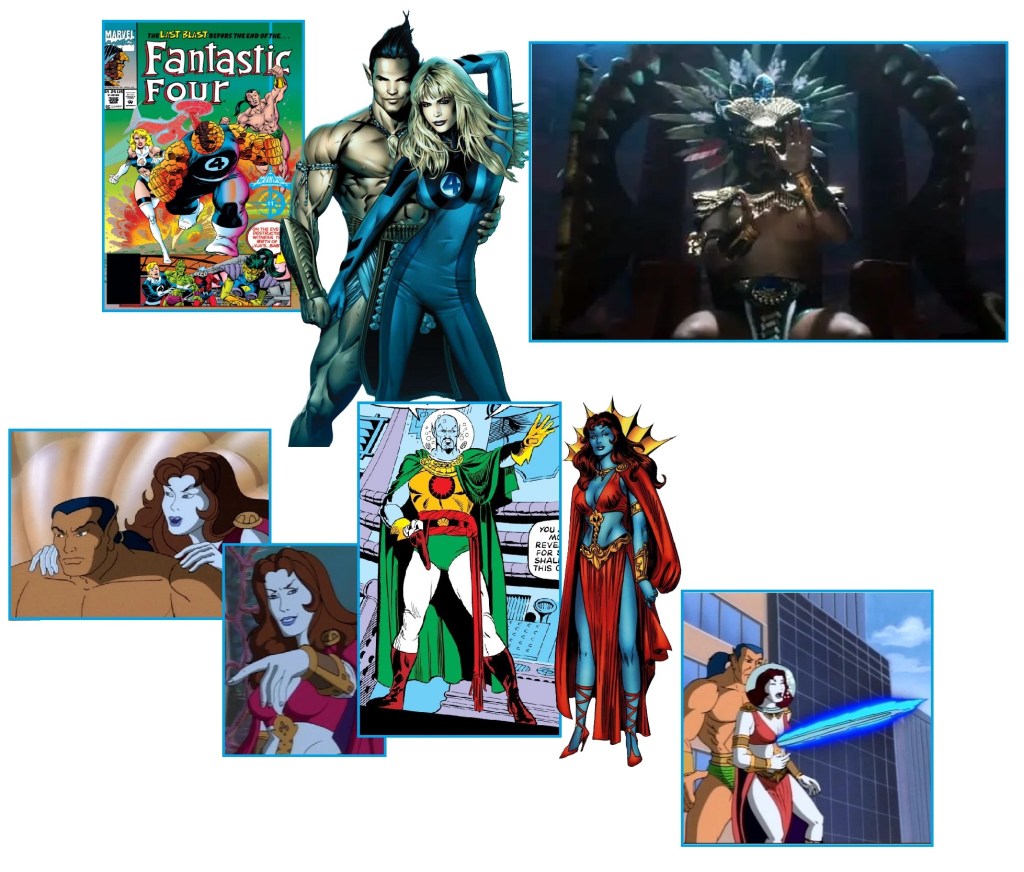
The Marvel Cinematic Universe would show a similar underwater journey to Atlantis seen through the eyes of Shuri in Black Panther: Wakanda Forever.
Another sign that this series isn’t as censored as the others: the electric eel is actually seen impaling Lady Dorma in the chest. For a few minutes afterward, the audience is genuinely led to believe she has died. Also Sue’s line to Reed when she’s testing his attention: “Okay, I’ll just be over here, drowning myself…” is sketchy at best.
Despite Namor’s promise to Sue that “There will be another day,” he doesn’t appear in the series again, outside of a brief flashback in Behold the Negative Zone.
NAMOR: THE RISE OF MARVEL’S FIRST ANTI-HERO
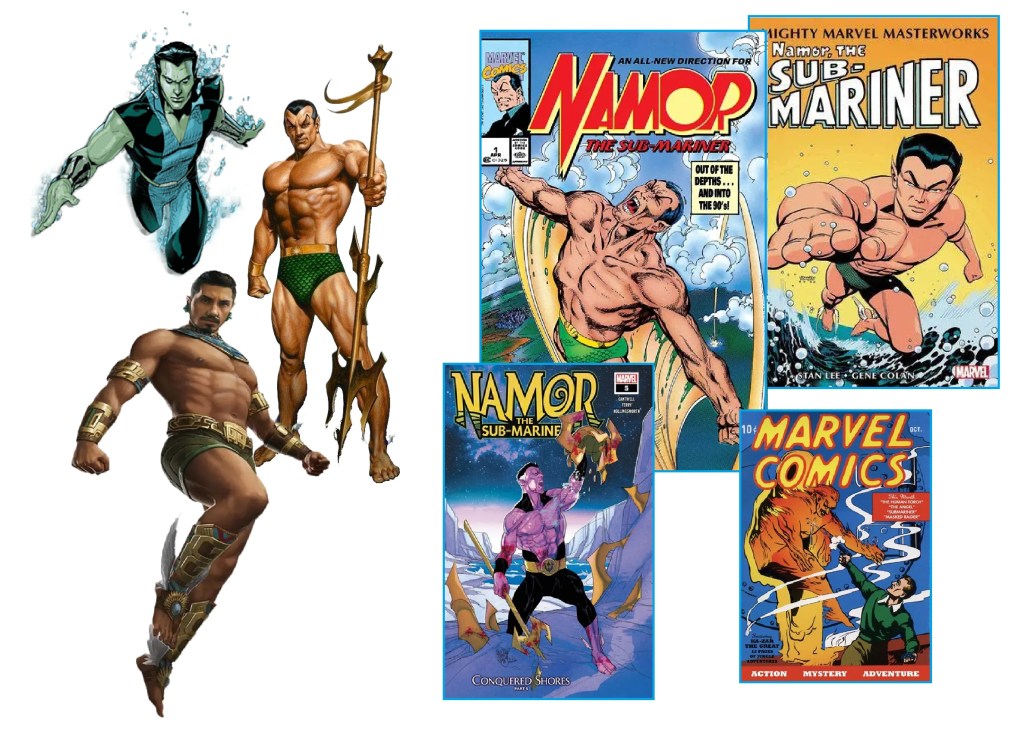
Before Spider-Man swung through New York or the X-Men fought for mutant kind, there was Namor. The Sub-Mariner didn’t just predate Marvel’s Silver Age – he defined the Golden Age. First appearing in Marvel Comics #1 in 1939, Namor McKenzie was the mutant son of a human sea captain and an Atlantean princess, born of two worlds and loyal to neither. He was Marvel’s first antihero: regal, volatile, and utterly uncompromising.
Namor’s early stories were filled with tension – he was just as likely to flood Manhattan as he was to save it. His battles with the original Human Torch and his role in The Invaders during World War II showed a character torn between vengeance and valour. He wasn’t a symbol of justice; he was a force of nature. And that made him unforgettable.
After fading from the spotlight post-war, Namor returned in the 1960s thanks to Stan Lee and Jack Kirby, who reintroduced him in Fantastic Four #4. From there, he became a recurring thorn in the side of surface dwellers, especially Reed Richards – his romantic tension with Sue Storm only added fuel to the fire. But Namor wasn’t just a villain. He joined the Defenders, Avengers, X-Men, and even the Illuminati, proving that his allegiance was always to Atlantis first, but his actions could serve a greater good.
That duality took centre stage in Black Panther: Wakanda Forever, where Namor made his long-awaited live-action debut, portrayed by Tenoch Huerta. Reimagined as the ruler of Talocan – a Mesoamerican-inspired underwater civilization – Namor was no longer just a monarch, but a protector of culture, history, and survival. His conflict with Wakanda wasn’t born of villainy, but of desperation and sovereignty, echoing his comic book roots as a character who defends his people at any cost. The film introduced him to mainstream audiences like never before, cementing his place in the MCU as a complex, commanding presence.
Today, Namor stands as one of Marvel’s most enduring and layered characters. From his underwater throne to his cinematic rise, he remains a symbol of power, pride, and the price of duality. He’s not just part of Marvel history – he is Marvel history. And whether he’s flooding cities or saving them, one thing’s certain: Namor always rises.
The Origin of the Fantastic Four (Part 2) | Incursion of the Skrulls


Leave a comment